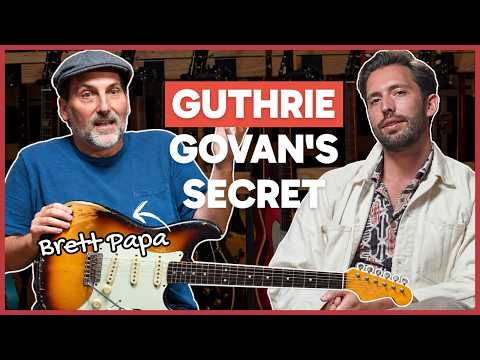
Why Guthrie Trapp Says You’re Soloing Wrong (And How to Fix It)
PodcastSoloing Isn’t About Scales — It’s About Hearing
Guthrie Trapp is one of Nashville’s most respected guitar voices, but his breakthrough didn’t come from learning more theory. It came from learning how to hear. For him, the guitar unlocked when he stopped memorizing patterns and started understanding the sound of the chords underneath.
He puts it simply:
“If I’m thinking about every note I’m playing, there’s no way it can flow.”
Instead of modes, Guthrie learned chord inversions up the neck, mapped the fingerboard around triads, and started targeting the tones that define each chord. That’s what let him solo over changes instead of winging it.
Growing Up Inside Music, Not Around It
Guthrie’s path started long before Nashville—jamming with his uncle after school, learning harmonica before guitar, soaking in Tony Rice, Sam Bush, and Jerry Douglas. His childhood wasn’t built around mainstream music; it was built around musicianship.
By age 12, he had a weekly gig. By 17, he was making enough cash to move into an apartment near the beach. School couldn’t compete. Music had already chosen him.
Nashville and the Endurance Game
When Guthrie arrived in Nashville, he didn’t chase big gigs. He chased relationships—showing up at Robert’s Western World every week until Don Kelley noticed him. That persistence led to the gig that changed everything.
And yet, he’ll tell you the same thing now that he believed then:
Talent matters, but endurance matters more.
You have to weather discouraging stretches, keep showing up, and keep playing—even when it feels like you’re sliding backward.
Not Chasing the Session Dream
For a few years, Guthrie tried to chase the “Nashville session guy” identity. Bought the amps, bought the pedals, studied the politics. But it wasn’t him. At some point he realized:
You can’t build a life in music by pretending to be someone else.
The turning point came when he leaned into his own artistic voice—one that blended blues, bluegrass, roots, and his own instinct-driven musicality. That honesty ended up resonating far more than trying to fit into a machine that wasn’t built for him.
Why Nashville Works
People think Nashville is just country music. Guthrie knows better. It’s bluegrass, jazz, funk, soul, hip-hop, pop, instrumental music, and every hybrid imaginable—all happening in a single zip code.
And what makes the city special isn’t just its talent. It’s density. It’s proximity. It’s community.
In Nashville, a guitar neck isn’t just an instrument—it’s a lightning rod for relationships.
A Lesson That Matters to Every Player
Guthrie’s biggest advice?
- Know your chord shapes
- Learn to hear the chord qualities
- Build your ear before building your vocabulary
Once those pieces click, soloing becomes expression—not math.
How Guthrie’s Philosophy Connects Back to Sonora
What Guthrie teaches through his stories mirrors what Sonora tries to cultivate: musicians who play with intention, feel, and clarity, not players trapped in patterns. The Sonora community is built around exactly this kind of musical honesty—learning the instrument deeply, trusting your ear, and finding mentors who’ve lived the reality behind the notes.
Guthrie’s journey shows what’s possible when you commit to hearing, to growing, and to showing up—values that sit at the core of Sonora’s learning culture.
Continue exploring
Insights from our community of musicians, mentors, and students.